
Introduction: Decoding the Dubai Real Estate Market for Smarter Investment
Dubai’s real estate market moves fast. If you are looking to invest in property here, you know it can feel overwhelming. Prices shift quickly. New projects launch every month. And the window for a great deal can close in days. That is why the Dubai real estate index exists. It cuts through the noise.
Unlike a stock market index that reflects hype, the Dubai Land Department (DLD) index shows what actually happened in the market. It is built on real transaction data, not feelings or guesses. This makes it a reliable compass for anyone making real estate investments Dubai. As 2026 data shows, the average price per square foot in Dubai hit 1,976 AED, up 18% year on year. Numbers like that matter when you are deciding where to put your capital.
For high-net-worth individuals and institutional investors, guesswork is not an option. You need authoritative, data-driven insights to navigate this complex market and make informed choices.
That is exactly what the Dubai real estate index provides. It helps you compare areas, spot trends, and identify the best entry points.
This guide gives you a deep dive into the Dubai real estate index, what drives it, and how to use it for smart luxury property investment. We will put special focus on Palm Jebel Ali, one of Dubai’s most exciting upcoming waterfront communities. Whether you want to invest in real estate Dubai for capital growth or lifestyle reasons, understanding the index is your first step.
If you are ready to explore luxury villa opportunities in Dubai’s prime developments, connect with Ayaz Salman for a free real estate consultation. He can help you apply these market insights to your specific investment goals.
What Is the Dubai Real Estate Index and How Is It Calculated?
So what exactly is the Dubai real estate index? If you have ever tried to read the market on your own, you know how confusing it can get. One week everyone says prices are going up. The next week someone says a correction is coming. The Dubai Real Estate Index (DREI) cuts through that noise with actual numbers.
Think of it as a thermometer for the property market. It tracks price movements across both residential and commercial properties in Dubai. This gives you a clear benchmark for how healthy the market really is. Unlike a stock market index that can swing on rumors or hype, the DREI is grounded in real data. As one analysis puts it, the index reflects the reality of transactions rather than market sentiment fluctuations. You can read more about how this works in the Understanding the Dubai Real Estate Index 2026 guide from Valorisimo.
How is it calculated?
The Dubai Land Department (DLD) is the source. Every property sale in Dubai gets registered with the DLD. That includes the price, the size, the location, and the property type. The index takes all those transactions and turns them into a single number that shows whether prices are rising or falling.
The DLD does not stop at one big number. It creates segmented indices for different property types.
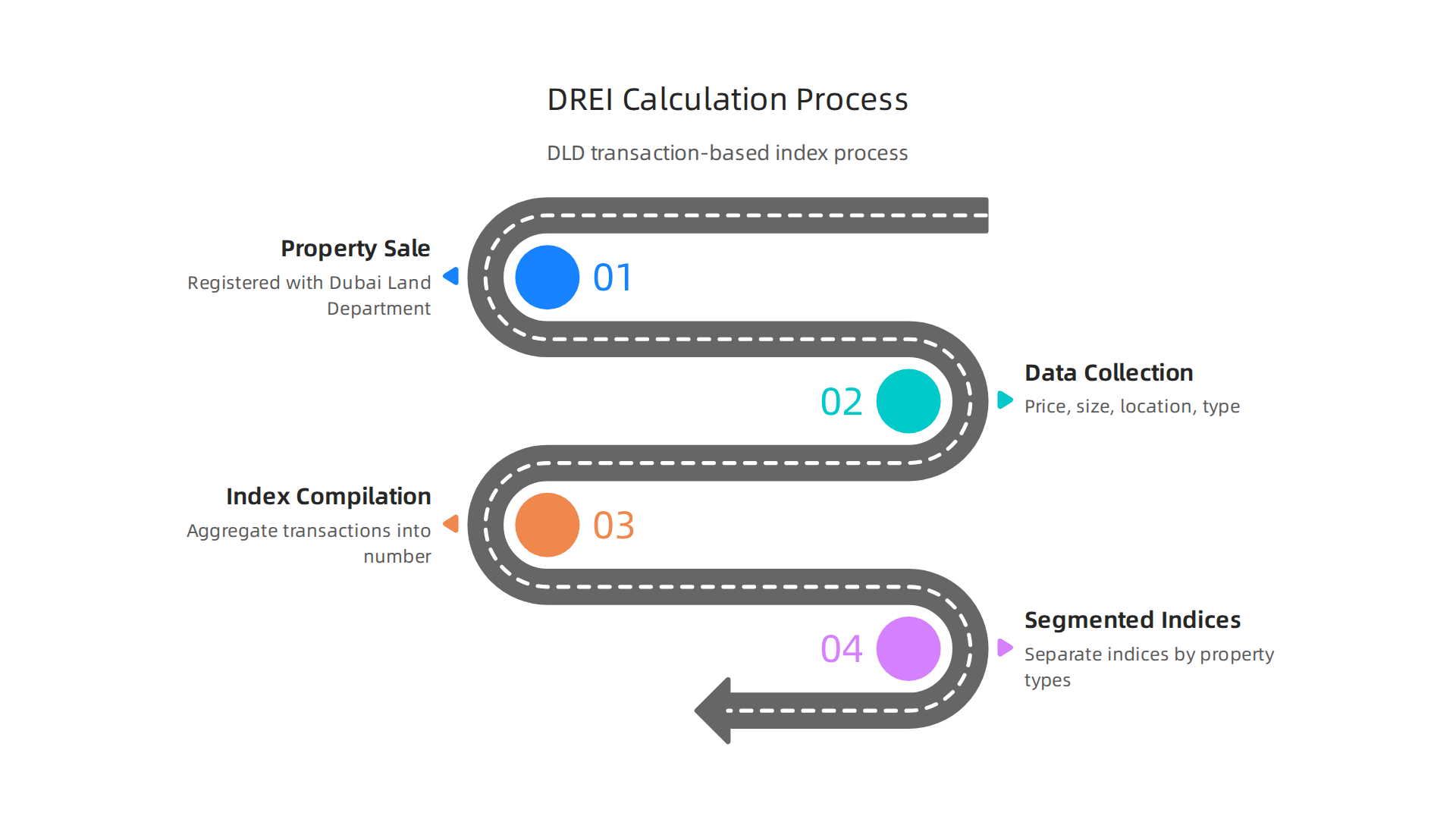
Apartments get their own index. Villas get their own too. And specific areas each have their own data. This is important because the market in Palm Jebel Ali moves differently than the market in Downtown Dubai.
For example, live data from 2026 shows the average price per square foot across Dubai hit 1,976 AED, up 18% year on year.
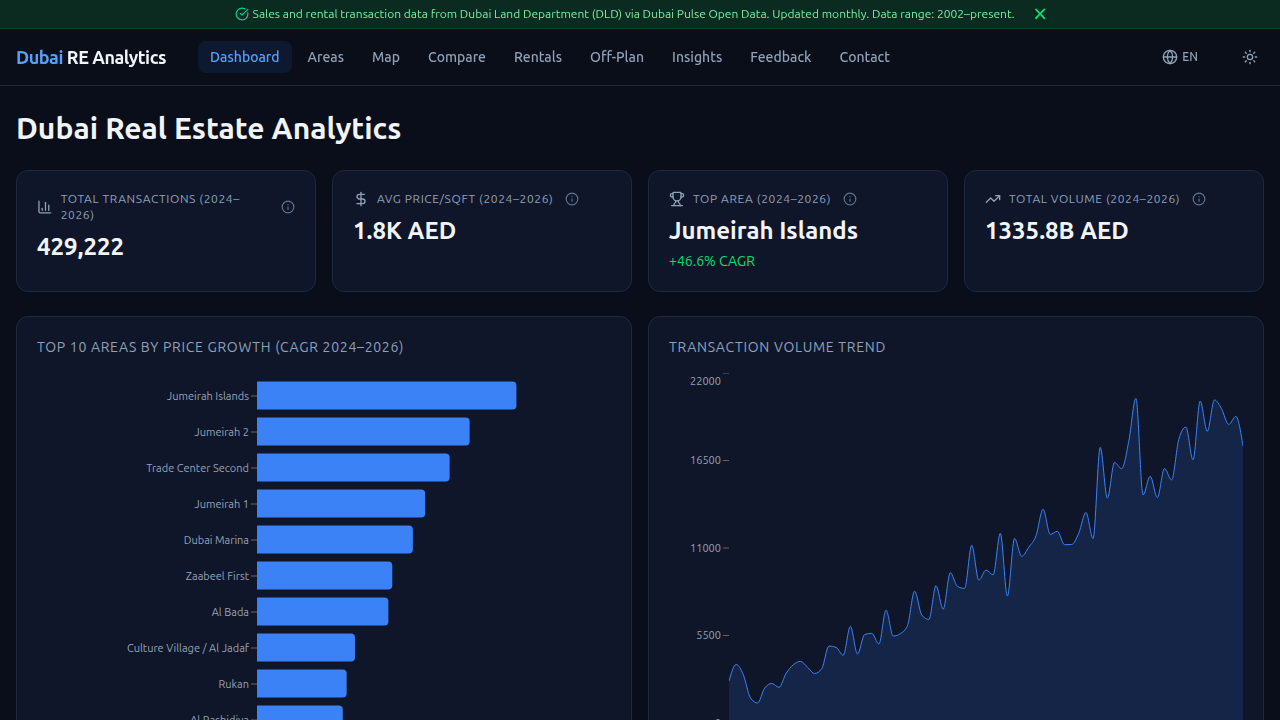
That is the big picture. But smart investors look deeper. They compare similar properties in specific areas to find the real story.
Why the methodology matters to you
Here is the thing. When you understand how the index is calculated, you stop relying on headlines and start reading the market yourself. You can spot which areas are actually gaining value versus which ones are just getting buzz. For anyone looking to invest in real estate Dubai, this kind of clarity is gold.
If you want to see the raw data yourself, you can visit the Dubai Land Department website to explore official transaction records.
Many investors also use platforms like Dubai Index for AI-powered forecasts based on the same DLD data.
The bottom line? The Dubai real estate index is your compass. Learn to read it, and you will make smarter decisions about where and when to buy.
Ready to put this knowledge to work? Connect with Ayaz Salman for a free real estate consultation and start applying these insights to your own investment strategy.
Key Drivers Influencing the Dubai Real Estate Index in 2026
You now know what the Dubai real estate index is and how it works. But the index does not move on its own. A bunch of forces push it up or down every single month. If you want to make smart real estate investments Dubai, you need to understand what those forces are.
Let me break down the three biggest drivers shaping the index in 2026.
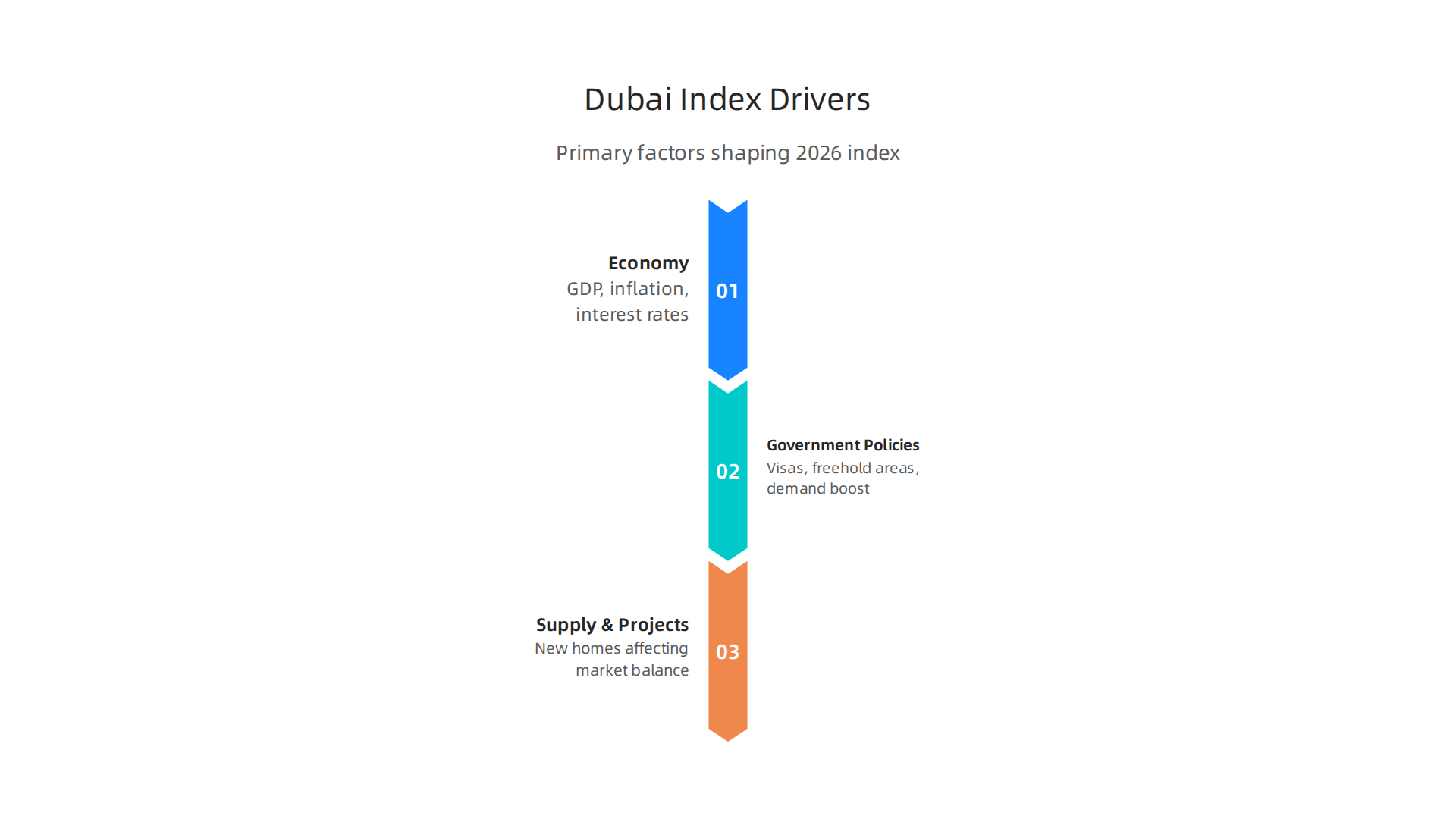
1. The Economy Sets the Stage
Macroeconomic factors are the foundation. When Dubai’s GDP grows, people earn more money and feel confident spending it on property. When inflation rises, building materials get more expensive, and that pushes up the price of new homes. Interest rates matter a lot too. Lower rates make mortgages cheaper, so more buyers enter the market. Higher rates cool things down.
A good way to see this is through official economic outlooks. For example, Deloitte’s 2026 commercial real estate outlook highlights how interest rates and inflation are top concerns for investors globally. In Dubai, these same factors are directly reflected in the index.
If you are serious about luxury real estate investments Dubai, you need to keep an eye on these big numbers. They set the tone for everything else. You can learn more about how to build a strategy around them in our guide on Dubai luxury real estate market strategies for high net worth investors.
2. Government Policies Open the Door
The government of Dubai uses smart policies to attract foreign money. Long term visas, Golden Visas, and the expansion of freehold areas all make it easier for international buyers to invest in real estate Dubai. These programs directly boost demand, which pushes the index higher.
Look at what happened with Palm Jebel Ali. The government expanded its freehold zones there, and live data from DXBanalytics shows average prices per square foot in Dubai rose 18% year on year as of 2026. That is a direct result of policy plus demand.
For international buyers, this means the market stays open and welcoming. You can see how this applies to luxury villas in our article about buying Dubai real estate for international buyers.
3. Supply and New Projects Keep Things Balanced
Finally, supply matters a lot. When developers launch new projects, they add to the total number of homes available. If too many villas or apartments hit the market at once, prices can level off. If demand stays high and supply stays tight, prices go up.
In 2026, Dubai is seeing a wave of new luxury launches, especially in waterfront areas like Palm Jebel Ali. The Dubai Land Department keeps a close watch on all these transactions through the index. You can explore the official DLD website to see how new registrations affect the numbers.
If you want to know which areas have the best balance of supply and demand, check out why investors are focusing on Palm Jebel Ali luxury villas in 2026.
Putting It All Together
The Dubai real estate index is not a mystery. It is shaped by the economy, by government policies, and by how many new homes hit the market. When you track these three drivers, you can predict where the index is headed next.

Want to apply this insight to your own investment plan? Connect with Ayaz Salman for a FREE Dubai Real Estate Consultation and start making smarter moves today.
Luxury Market Trends: Palm Jebel Ali and the High-End Segment
Now you understand what drives the overall Dubai real estate index. But here is the thing. The luxury market does not move the same way as the rest of the city. High end properties, especially in exclusive areas like Palm Jebel Ali, follow their own rhythm. If you want to invest in real estate Dubai at the top end, you need to zoom in on this separate world.
Palm Jebel Ali Is a Different Game
This is not your average neighborhood. Palm Jebel Ali is being built as one of Dubai’s most exclusive luxury destinations. The villas there are enormous, ranging from 7,300 to 8,500 square feet according to Propsearch.ae. And the prices reflect that exclusivity.
Look at the numbers. A recent report from DXB Interact showed that the median price for a villa in Palm Jebel Ali hit AED 21,404,000. That is a 7% year over year increase in price per square foot. Meanwhile, Gulf News reported that the average price per square foot for built villas is around Dh3,000. Compare that to the overall Dubai average, and you see the premium.
Even more striking, data from Kane Bridge News shows that average property prices per square foot in Palm Jebel Ali rose 16.1% year on year. That is more than double the broader market’s growth.
Why the Luxury Index Moves Differently
The luxury segment of the Dubai real estate index behaves differently because of two key factors. First, scarcity. There are only so many beachfront villas on a manmade island. That limited supply keeps prices strong even when the broader market cools. Second, global wealth flows. Ultra high net worth individuals from around the world buy these homes as trophy assets. They are less affected by local interest rates or inflation. For them, owning a piece of Palm Jebel Ali is about status and long term security.
This is why analyzing the index alone is not enough. You need to look at location specific sub-indices. If you rely only on the overall Dubai number, you might miss the real story in luxury waterfront areas.
What This Means for Your Investment
If you are serious about real estate investments Dubai, especially in the luxury space, you must study these micro trends.
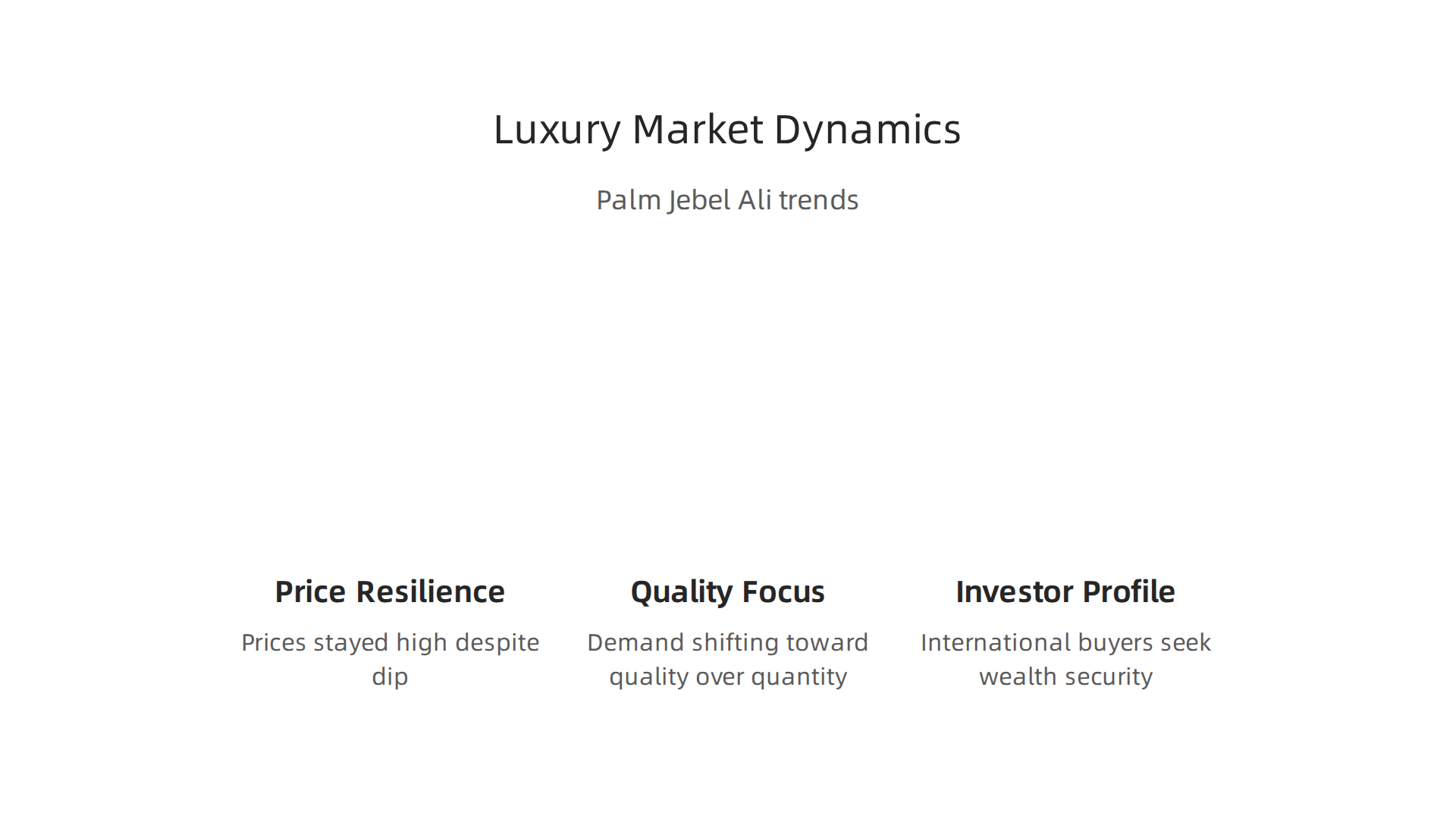
Transaction records from Bayut show that sales volume in Palm Jebel Ali dipped 13% recently, but average prices stayed high at AED 19,448,000. That tells you demand is shifting toward quality over quantity.
The high end segment also attracts a different buyer profile. Many are international investors looking for a safe place to park wealth. You can learn more about how these buyers operate in our guide on buying Dubai real estate for international buyers.
Stay Ahead of the Luxury Curve
The Dubai real estate index is a useful tool, but it only tells part of the story. For Palm Jebel Ali and other exclusive communities, you need deeper analysis. You need to track price per square foot trends, sales volumes, and global capital flows.
Want to know which luxury sub market offers the best opportunity right now? Connect with Ayaz Salman for a FREE Dubai Real Estate Consultation and get personalized insights tailored to your goals.
Using the Dubai Real Estate Index for Investment Decision-Making
Now you know how the luxury segment moves on its own. But what about the bigger picture? The Dubai real estate index is your compass for the entire market. If you learn to read it the right way, you can make smarter choices about when to buy, what to buy, and when to wait.

Spotting Market Cycles with the Index
Every market goes through phases. Growth. Stability. Correction. The index shows you which phase we are in right now. For example, the Dubai property market forecast 2026 from Banke.ae suggests moderate and selective growth rather than a uniform boom. That is a key signal. It tells you not every property will rise. You need to pick carefully.
The index also helps you compare different asset classes. Villas, apartments, and commercial properties all behave differently. According to Sands of Wealth price forecasts for 2026, villas are expected to appreciate around 13% to 15% annually. That is much higher than other types. By checking the sub-index for villas versus apartments, you can see where the real growth is happening.
Timing Your Entry and Exit
Here is where the index becomes a real money saver. Imagine buying into a market that is about to drop. That hurts. Some investors in early 2026 learned this the hard way. Reports showed that the Dubai real estate index dropped significantly after geopolitical tensions escalated. Those who ignored the index signals and bought at the peak got caught. A simple look at the index trend could have warned them to wait.
On the flip side, the index can reveal undervalued opportunities. Take Palm Jebel Ali. While the overall index was cooling, a Gulf News report noted that its waterfront plots were competitively priced compared to other luxury areas. An investor who only watched the headline index might have missed that. But someone who drilled into the location-specific sub-index saw the chance.
Combining the Index with Other Data
The index alone is powerful, but it does not tell you everything. You also need yield data and capital appreciation forecasts. That is how you get a complete picture of your potential returns. The Engel & Volkers guide on how to invest in Dubai real estate highlights that Dubai offers high rental yields. So when you see a sub-index that shows strong price growth and you pair it with above average rental yields, you have a winning combination.
For example, look at the Bayut transaction data for Palm Jebel Ali. Sales volume dipped 13% recently, but average prices stayed high at AED 19.4 million. That tells you demand shifted toward quality. A smart investor using the index alongside transaction volumes could have seen this trend forming before everyone else.
Making the Index Work for You
You do not need to be a data scientist. Start by checking official Dubai Land Department data. Then look at reports from trusted sources. Over time, you will see patterns. But if you want to speed things up, working with an expert helps. They can interpret the index for your specific goals and tell you exactly where the opportunities are hiding.
Ready to put the Dubai real estate index to work for your portfolio? Get personalized guidance from someone who lives and breathes this market. Connect with Ayaz Salman for a FREE Dubai Real Estate Consultation and start making decisions backed by real data.
Legal and Ownership Considerations for Foreign Investors in Dubai Real Estate
Whether you are watching the Dubai real estate index or just starting your search, the legal side matters as much as the numbers.
Dubai has its own rules for foreign investors. And in 2026, some of those rules have changed in big ways.
Start with the basics. Freehold versus leasehold. Foreigners can only own property outright in specific areas. The good news is that Palm Jebel Ali is a freehold zone. That gives you full ownership with no time limits. According to Sands of Wealth’s guide on foreign ownership in 2026, any foreign national with a valid passport can buy in these designated zones. That is a green light for most international buyers.
Next, you need to register your purchase with the Dubai Land Department. The process is straightforward, but you need a reliable team around you. One thing many investors overlook is inheritance. Without a registered will, your property will follow Sharia law. Driven Properties explains the real estate laws for 2026 in clear terms, including how RERA protects your rights. It is a smart read before you sign anything.
Now let’s talk about one of the biggest perks. The visa pathway. The rules got more flexible in 2026. The new Golden Visa rules from Behniyate Avassoli now let you qualify even with a mortgaged property. And the old AED 750,000 minimum for the standard investor visa? Gone. KPMG’s alert on the revised visa rules confirms that barrier has been removed. This makes real estate investments in Dubai far more accessible.
And then there are the taxes. No property tax. No capital gains tax. Imagine buying a villa for AED 20 million and selling it for AED 25 million later. That profit stays with you. That alone is a major reason why serious investors choose to invest in real estate in Dubai over other global cities. To see how that fits into a bigger plan, read our breakdown of luxury real estate market strategies for high net worth investors.
But here is a word of caution. Not every developer is equal. Always check that a developer is registered with RERA. Look at their history. Read recent real estate news. If you are focused on a community like Palm Jebel Ali, stick with developers who have proven themselves. Our guide on buying luxury villas in Palm Jebel Ali for international buyers can help you vet your options.
Navigating these legal details alone is risky. Rules change. Paperwork gets confusing. That is exactly why having a local expert makes all the difference. They connect you with the right advisors and protect your investment from day one.
Ready to move forward with confidence? Connect with Ayaz Salman for a FREE Dubai Real Estate Consultation and get clear answers about the legal process.
Future Outlook: Predicting Dubai Real Estate Index Movements and Opportunities
You have seen how the legal side works and where the market stands now. But what about tomorrow? The dubai real estate index is not a fixed number. It moves with supply, demand, and global money.

In 2026, the outlook is bright for luxury properties, but you need to know where the risks hide.
Analysts from top firms like Knight Frank, Savills, and CBRE expect continued price growth of 5% to 8% per year for Dubai prime residential. That is according to a Q1 2026 market review by Astraterra. The reason? Supply constraints on high-end villas and steady demand from wealthy international buyers. If you are planning to invest in real estate dubai, this kind of steady climb is exactly what you want to see.
But the real story is about new micro-markets. Mega-projects like Palm Jebel Ali and Expo City are not just additions to the map. They create their own dubai real estate index behavior. A villa on Palm Jebel Ali will follow different price patterns than a downtown apartment. That is why it pays to focus on specific communities. Our detailed guide on buying luxury villas in Palm Jebel Ali for international buyers shows you how these micro-markets work.
Now a dose of reality. No market goes up forever. Risk factors include global economic slowdowns, oil price volatility, and oversupply in certain segments. According to Global Property Guide’s 2026 market analysis, nearly 366,000 residential units are projected to enter the market by 2028. A big chunk arrives in 2026 and 2027. That means more competition in some areas. Staying on top of real estate news helps you spot which segments are oversupplied before everyone else does.
So how do you play it smart? Focus on scarcity. Luxury villas in developments like Palm Jebel Ali are limited. Demand keeps rising. The long-term fundamentals work in your favor. But you need a partner who watches the numbers every day.
Ready to see where the index is heading for your specific investment? Connect with Ayaz Salman for a FREE Dubai Real Estate Consultation and get a personalized forecast for your goals.
Summary
This article explains the Dubai real estate index, how it is calculated by the Dubai Land Department from real transaction data, and why it matters for anyone investing in Dubai property. It breaks down the three main forces moving the index in 2026 — macroeconomics, government policy, and supply/new projects — and shows how those forces affect both the broader market and high-end submarkets like Palm Jebel Ali. The guide highlights why luxury villas behave differently (scarcity and global wealth flows), how to combine the index with yield and transaction data, and practical steps for timing entry and exit. It also covers legal issues for foreign buyers, recent visa rule changes, and tax advantages that make Dubai attractive. Readers will learn how to read sub-indices, spot micro-market opportunities, and assemble the right local team to turn index insights into better luxury investment decisions.