
Introduction
Are you thinking about buying property in Dubai this year? You are not alone. The Dubai real estate market continues to pull in wealthy buyers from all over the world. Luxury homes in prime areas are selling at record prices. One big reason is the launch of Palm Jebel Ali. This new project gives early investors a rare shot at a waterfront villa in a world famous location.
But before you jump in, you need to understand the numbers. The Dubai real estate price landscape has changed a lot since 2020. Prices have nearly doubled in some areas. In fact, the average price per square foot across the city now sits around AED 1,658, according to the latest average price per square foot in Dubai for 2026 report. Of course, prices vary a lot by location and property type. Downtown Dubai apartments cost more per square foot than villas in the suburbs.
This guide gives you a clear, data driven look at Dubai real estate trends in 2026. You will learn which areas are growing fastest, what prices to expect, and how to make a smart move. If you are serious about buying luxury property in Dubai, understanding the price story is your first step.
Dubai still offers strong value compared to cities like London, New York, and Hong Kong. And with projects like Palm Jebel Ali coming to life, the opportunity is real. Ready to explore your options? FREE Dubai Real Estate Consultation
Understanding the Dubai Real Estate Market in 2026
The Dubai real estate market follows clear cycles of growth and change. Since 2020, stronger regulations and rising foreign investor demand have pushed prices up sharply. By 2026, the market has matured into three clear segments: prime luxury, mid-tier, and affordable.
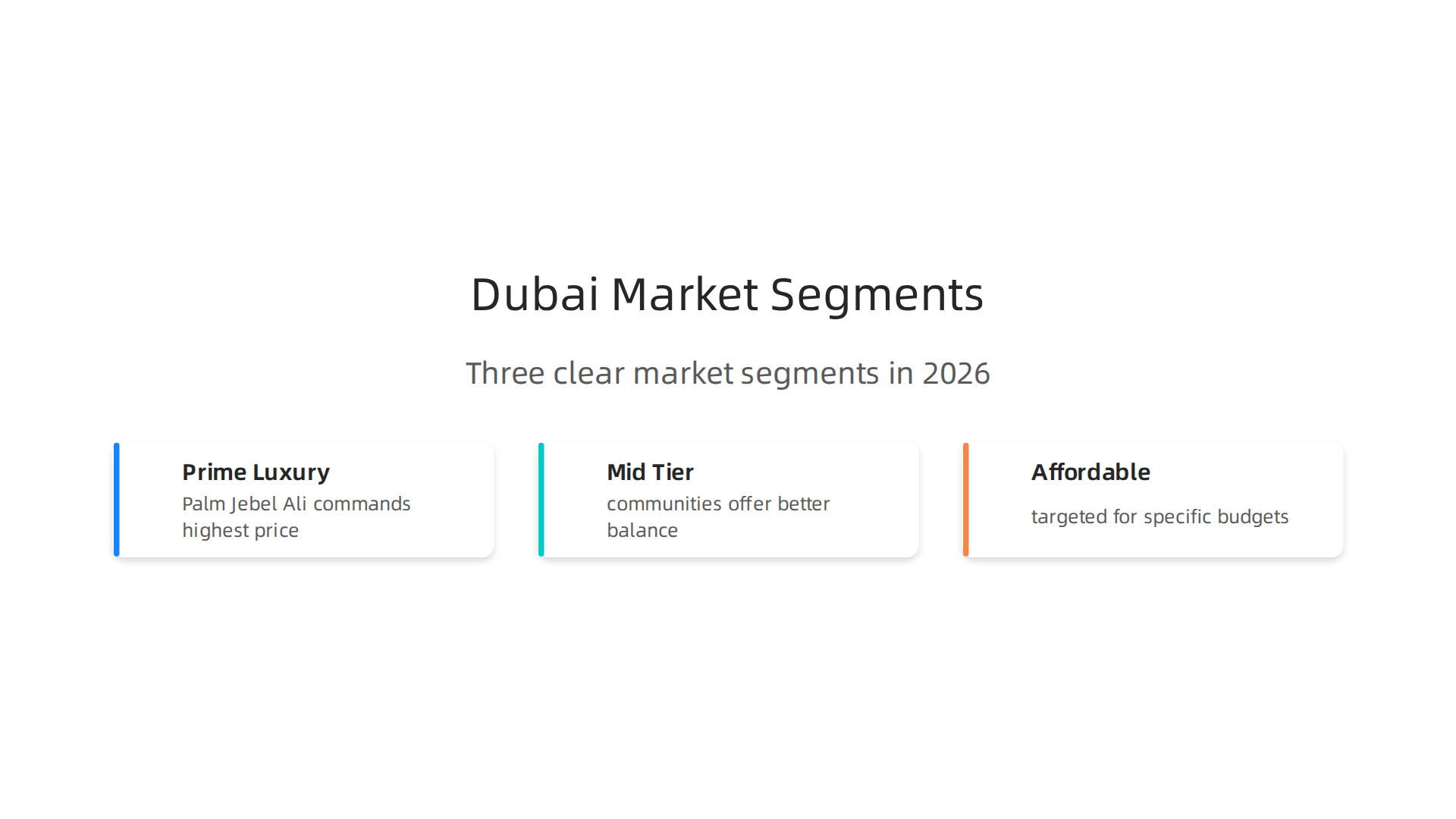
Prime spots like Palm Jebel Ali command the highest price per square foot, while mid-tier communities offer better balance. Knowing these price tiers helps you target the right neighborhood for your budget. For a full view of how each segment is performing, check the dubai real estate index 2026 for smarter decisions. A detailed How Dubai Property Prices Compare with Major Global Cities in 2026 report also shows Dubai still offers strong value compared to London, New York, and Hong Kong.
Key Drivers of Property Prices
Several strong forces drive the Dubai real estate price higher in 2026.
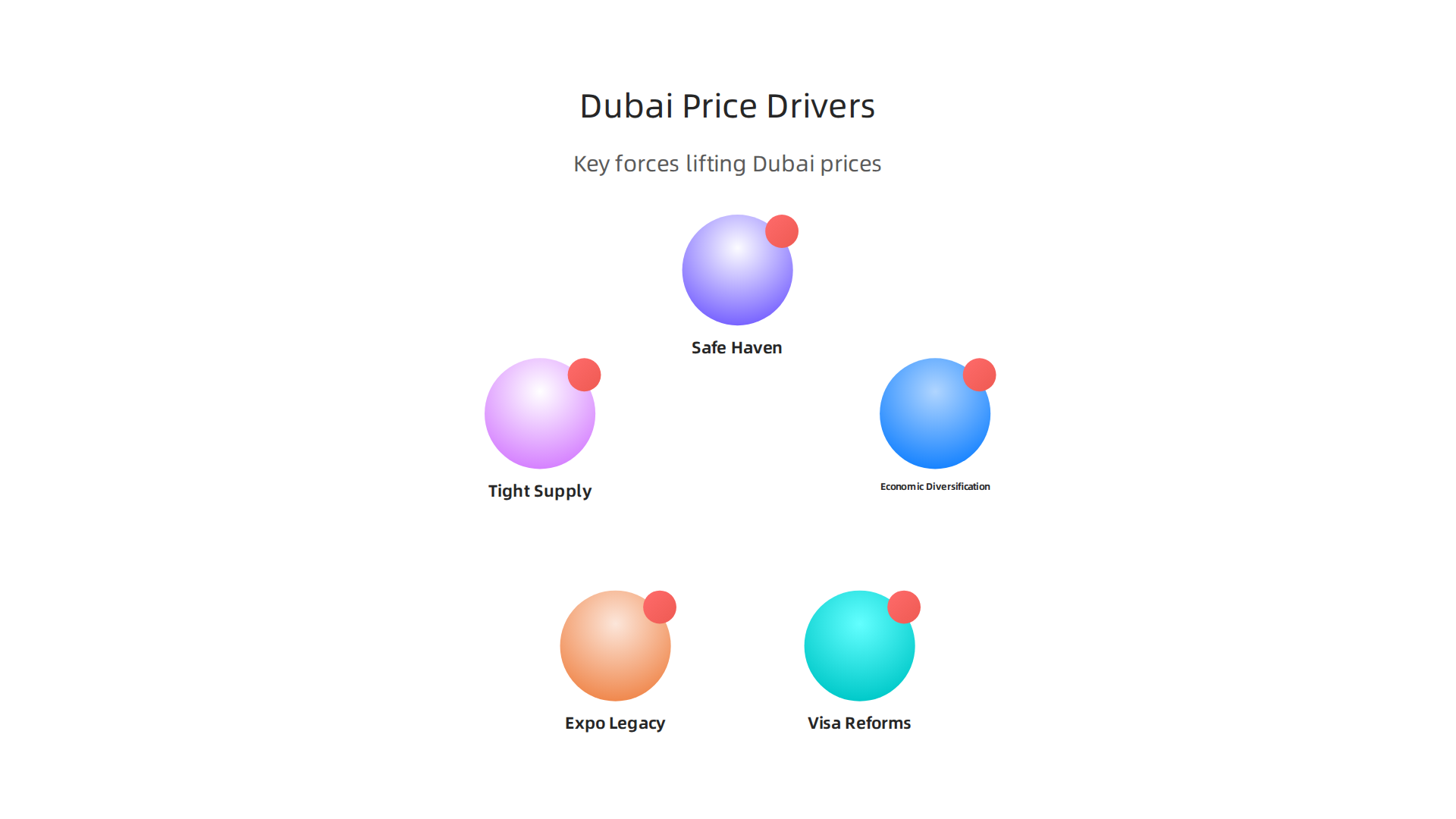
First, the government’s economic diversification plan has worked. Sectors like tech, finance, and tourism now make up a bigger share of the economy. This attracts skilled workers and investors from around the world. At the same time, visa reforms such as the Golden Visa and remote work permits make it easier for foreigners to live and buy here. And the Expo 2020 legacy kept Dubai on the global map, boosting tourism and business confidence. All of this fuels steady demand.
Second, supply in the most desirable neighborhoods stays tight. Prime villa communities like Palm Jebel Ali and Emirates Hills have limited land. New luxury developments sell fast because buyers want exclusivity. This keeps the average price per square foot climbing in these areas. You can see this trend in the UAE property prices in 2026 guide for detailed numbers.
Third, global economic uncertainty has made Dubai a safe haven. Investors from unstable regions move capital into Dubai real estate, making real estate investment in UAE a top choice for security. This pushes the luxury segment even higher. A United Arab Emirates’ Residential Property Market Analysis 2026 confirms that foreign buyer demand remains strong.
Whether you want to buy for lifestyle or investment, understanding these drivers helps you time your entry. If you are ready to invest, you can get a FREE Dubai Real Estate Consultation to discuss your options.
The Role of Demand from High Net Worth Individuals
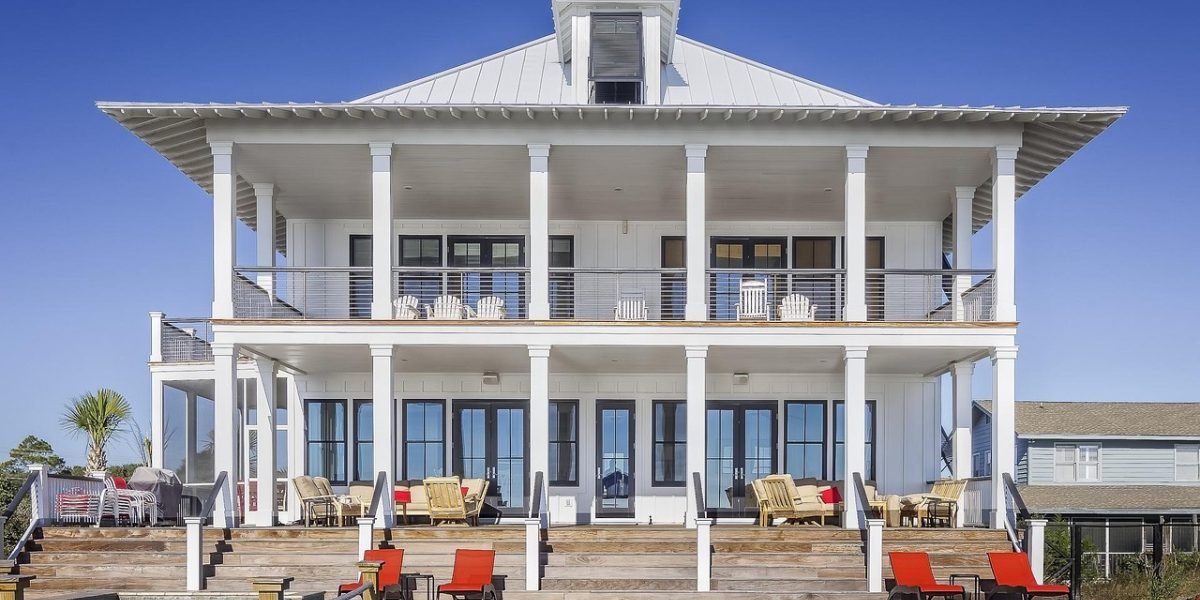
High net worth individuals are changing the Dubai real estate market in 2026. These buyers do not just want any home. They want ultra-luxury villas with privacy, beachfront views, and smart home features.
And they are willing to pay a premium for it.
What is driving this trend? More family offices and wealth managers are moving their money into Dubai real estate. They see the city as a safe place to grow their wealth. The numbers back this up. An analysis of the Inside the UAE Housing Market 2026 report shows that luxury and ultra-luxury property sales jumped by over 30% in 2025 compared to the year before. That momentum has carried into 2026.
Palm Jebel Ali is built for this exact audience. The development offers bespoke villa offerings that give HNWIs everything they want. Think private beach access, large floor plans, and top tier security. It is hard to find that level of exclusivity in other parts of the city.
If you fall into this buyer category, you need a strategy that matches your goals. Check out our guide on Palm Jebel Ali luxury villas investment to see how this community fits the HNWI lifestyle.
Overview of Dubai Real Estate Prices by Area
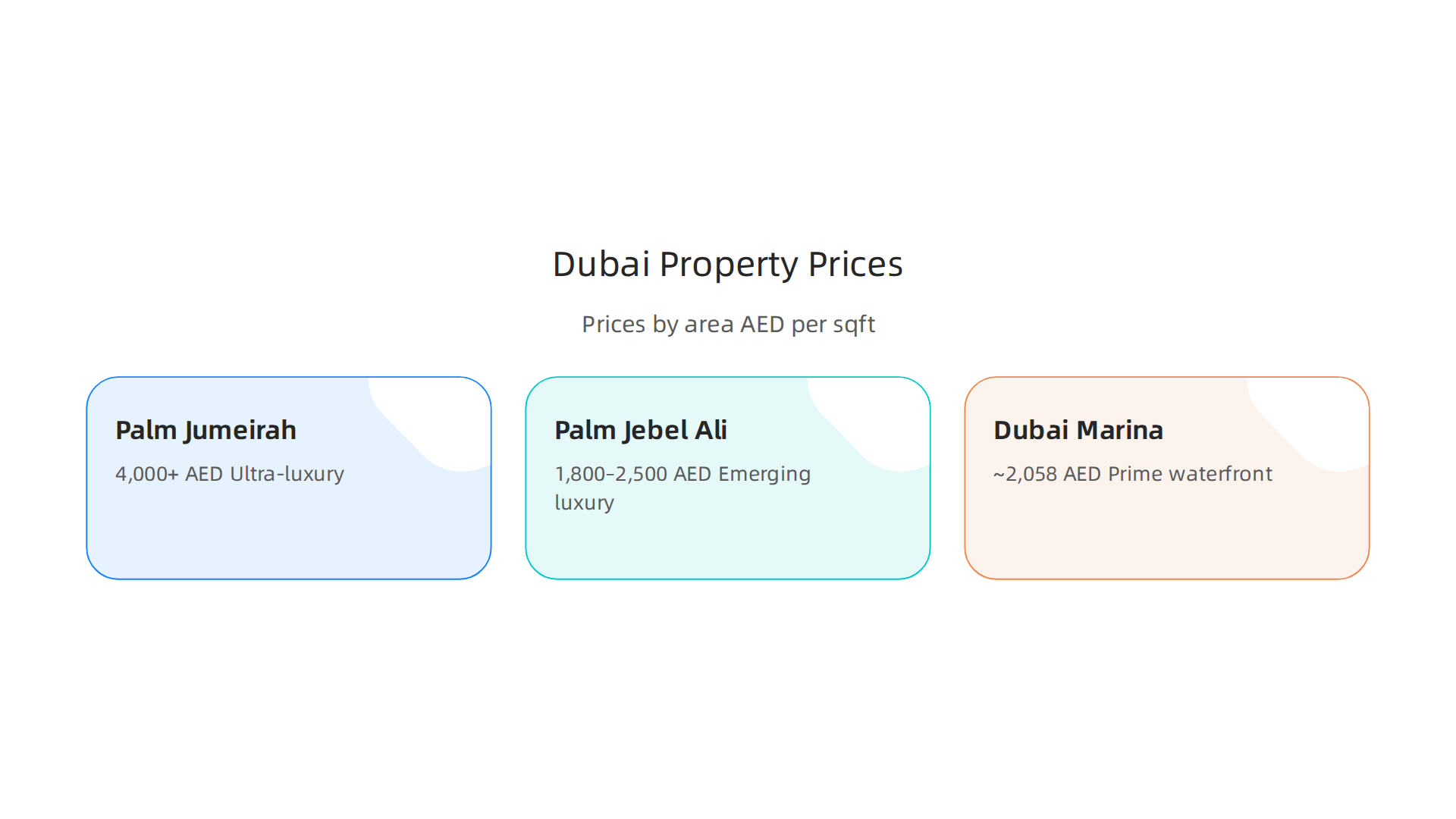
To make a smart real estate investment in uae, you must understand the dubai real estate price per square foot across different locations. Prices vary dramatically. According to the Dubai Average Property Price per Sq Ft by Area (2026) report, prime areas like Palm Jumeirah command values above AED 4,000 per sq ft. In contrast, emerging locations such as Palm Jebel Ali offer entry points with strong appreciation potential.
| Area | Approx. Price per Sq Ft (AED) | Segment |
|---|---|---|
| Palm Jumeirah | 4,000+ | Ultra-luxury |
| Palm Jebel Ali | 1,800 – 2,500 | Emerging luxury |
| Dubai Marina | ~2,058 | Prime waterfront |
This table helps visualize the range of opportunities in today’s dubai real estate market.
For a deeper breakdown of how prices compare across all major communities, see our UAE property prices 2026 guide. If you want personal help finding the best value property for your goals, connect with an advisor through our FREE Dubai Real Estate Consultation.
Prime Locations: Palm Jumeirah, Emirates Hills, Downtown
If you are looking at the top of the dubai real estate market, three areas stand out above the rest. Palm Jumeirah still holds the crown. Limited land supply and enormous global demand keep pushing prices up. Here, you are paying for exclusivity and beachfront living. The dubai real estate price per square foot here often starts above AED 4,000 and can climb much higher for prime plots.
Over in Emirates Hills, the story is different but just as premium. This is Dubai’s version of a gated golf course community. Villas sit on large plots with views of the manicured greens. Land value here is sky high because there is no more room to expand. If you love space and privacy, this area is hard to beat. For a closer look at how it compares with other top villa destinations, check out this Emirates Hills houses for sale comparison.
Downtown Dubai offers a different kind of luxury. Here, the action is vertical. High rise apartments near the Burj Khalifa and Dubai Mall command top dollar. According to the latest Downtown Dubai Property Prices 2026 report, prices per square foot range from AED 2,200 for standard units to over AED 7,000 for ultra luxury residences. Demand stays strong because buyers want that iconic city lifestyle. These three prime locations show you just how wide the range of opportunity is in today’s market.
Emerging Luxury Hotspots: Palm Jebel Ali, Dubai Creek Harbour
While the established areas hold strong, forward looking buyers are turning their attention to two emerging powerhouses. Palm Jebel Ali is the next big thing from Nakheel. Only about 5 percent of its villas have been released so far, which creates rare exclusivity. These waterfront homes offer a stunning discount compared to Palm Jumeirah. According to the latest Palm Jebel Ali Off-Plan Villas 2026 analysis, villas here trade at AED 2,500 to 2,800 per square foot, roughly 60 percent below Palm Jumeirah. With master planning and phased releases keeping supply tight, early buyers are positioned for strong appreciation as the project matures.
Dubai Creek Harbour is another area drawing serious interest. The centerpiece is Dubai Square, a massive retail and entertainment hub.
Luxury apartments here offer stunning views of the Dubai skyline and the historic creek. The whole district is designed around walkability, green spaces, and modern living. Infrastructure investment is already reshaping the area, making it a prime spot for those who want city energy with a fresh feel.
Both of these neighborhoods benefit from careful planning and strong developer backing. If you are exploring options beyond the usual prime addresses, these emerging hotspots deserve a close look. For a deeper dive into why investors are flocking to this side of Dubai, check out this Palm Jebel Ali luxury villa investment guide. And if you are ready to start your own search, you can get a FREE Dubai Real Estate Consultation with an expert who knows these markets inside out.
Factors Influencing Dubai Real Estate Prices
What drives the dubai real estate price? Three main forces shape the dubai real estate market.
First, macroeconomic trends. Strong GDP growth and rising tourism push prices up. Second, government policy matters a lot. Smart rules, like the updated Dubai real estate investor visa rules from KPMG, now remove the minimum property value for sole owners. Tax-free ownership and RERA oversight also keep things stable.
Third, supply and demand. Areas with limited inventory, like Palm Jebel Ali, see stronger growth. For deeper context, check this guide on how Dubai real estate governance protects your investment.
Understanding these forces helps you time your entry and exit in the real estate investment in UAE space.
Economic Indicators and Government Policies
Beyond the big three forces, two specific areas shape the dubai real estate price day to day: economic indicators and government policies.
Strong GDP growth and rising tourism keep demand high. But inflation and interest rates directly affect how much you can borrow and what monthly payments look like. When borrowing costs go up, some buyers slow down. When the economy grows, more people feel confident enough to invest in dubai real estate.
The government plays a big role too. Dubai’s 2040 Urban Master Plan aims to make the city more livable and attractive for the long term. This plan opens up new freehold ownership zones, giving foreign buyers more options. According to a recent guide on Dubai real estate laws, areas like Al Wasl, Meydan, and Dubai South are now open for investment, along with expanding freehold zones in SZR and Al Jaddaf. You can read more about these updates in the overview of Dubai Real Estate Laws and Regulations 2026.
These policies create a stable environment where real estate investment in UAE feels safer. For a deeper look at how the market is performing across different price points, check this analysis of the Dubai real estate index 2026.
If you are thinking about buying or selling, understanding these economic signals and government moves helps you make smarter choices. FREE Dubai Real Estate Consultation with Ayaz Salman can help you apply this knowledge to your specific situation.
Infrastructure Developments and Expo City Legacy
Think about what happens when a new metro station opens in your neighborhood. Suddenly, that area feels more connected. More people want to live there. And that demand pushes the dubai real estate price higher.
Dubai knows this well. The city keeps expanding its metro lines, widening roads, and growing airport capacity. Each project makes certain zones more desirable. Areas that were once considered far from the action now feel close and convenient. This shift directly affects the dubai real estate market because buyers pay a premium for easy access.
One of the biggest examples is Expo City Dubai. You might remember the Expo 2020 site. Today, it has transformed into a full residential and business hub. This change adds real value to nearby neighborhoods. As more shops, offices, and homes open there, the areas around Expo City see steady price growth.
Infrastructure projects and property values move together. When a new road cuts travel time in half, or a metro line connects a quiet zone to the city center, prices in that zone tend to rise. This is not a guess. It is a pattern you can see across Dubai’s history of development. Strong Dubai real estate governance protections ensure that these projects stay on track and meet quality standards.
If you want to benefit from these trends, it helps to know which areas are getting new infrastructure and how that affects long-term value. The recent updates on investor visa rules from KPMG show that Dubai is making it easier for international buyers to invest here as the city grows. The government has revised visa requirements to attract more investors, which pairs well with the new infrastructure making more areas worth investing in.
Supply and Demand Dynamics
But even with easier visas and better infrastructure, one factor drives the dubai real estate price more than anything else: the balance between supply and demand. Right now, that balance heavily favors sellers.
In the ultra-luxury segment, villa supply is tight. Prime areas have limited land left for new beachfront mansions. This keeps prices high for existing properties. New off-plan launches, especially at Palm Jebel Ali, bring fresh inventory to the market. But these projects use phased delivery. Only a small number of villas become available at a time, which helps maintain strong pricing.
Even with new freehold zones opening up for investment, as outlined in Dubai real estate laws and regulations 2026, the supply of luxury villas in prime waterfront locations remains scarce.
Meanwhile, demand from international buyers keeps growing. Wealthy investors from around the world see Dubai as a safe place to park their money. This combination pushes the dubai real estate market upward. For a deeper look at what is driving this, see why investors are buying luxury villas in Dubai right now.
This environment creates urgency for buyers. If you want to find the best opportunity in this competitive market, connect with an expert who can guide you. Get your FREE Dubai Real Estate Consultation today.
Price Trends and Forecasts for 2026 and Beyond
Dubai has always moved in cycles. Strong growth periods get followed by small corrections. That is just how this market works. But right now, the luxury segment is showing steady, moderate gains instead of wild spikes.
Market analysts report that villa prices in top communities are appreciating at a healthy three to eight percent each year. Scarce supply and rising international demand drive this trend. You can see the full picture in this breakdown of Dubai luxury villa rentals surge.
Palm Jebel Ali stands apart. Its exclusive beachfront layout and limited inventory make it a rare find. Experts predict it will outperform the broader dubai real estate market in the years ahead. For a deeper look at the numbers, read this guide to UAE property prices 2026.
Historical Price Data (2019-2025)
Think back to early 2020. The world shut down. Dubai’s property market hit pause too. Prices across the city dropped as uncertainty took hold. It was a tough moment for anyone watching the dubai real estate price charts.
But then something interesting happened. Starting in 2021, the market roared back. Demand from international buyers surged. Remote workers and wealthy families flocked to the city. Prices started climbing fast and did not stop for three straight years.
Palm Jumeirah villas became the star of this recovery. From their 2020 low point, these luxury homes appreciated by over 80%. That is a massive gain in a short time. It showed just how strong the dubai real estate market can be when global conditions shift in its favor.
By 2024, the pace had cooled down a bit. Prices were still rising, but at a slower, healthier rate. Then 2025 brought a new phase. The market stabilized. Prime areas saw a slight uptick while other neighborhoods held steady.
If you want to understand where the market is headed next, reading this guide to UAE property prices 2026 can help you see the big picture.
This historical pattern matters for one simple reason. It tells you that Dubai real estate has proven its ability to bounce back after downturns. That kind of track record is rare in global property markets.
And now, as we move through 2026, the lessons from 2019 to 2025 are still shaping how smart investors make their moves. If you are considering a real estate investment in uae, understanding these price cycles is the first step toward making a confident decision.
If you are thinking about investing in Dubai real estate, now might be the right time to get expert advice. Reach out for a FREE Dubai Real Estate Consultation.
Expert Predictions for Luxury Segment
So what do the numbers say about where luxury properties are heading next? Based on current market data, leading analysts see steady growth ahead. According to a recent report in Khaleej Times, market analysts note that villa prices in prime communities continue to appreciate at a healthy pace of 3% to 8% each year. For the top tier of luxury homes, the consensus puts the sweet spot at 5% to 8% annual growth over the next two years.

Palm Jebel Ali villas could do even better. Because these waterfront homes are limited in number, scarcity pushes their expected growth higher. Experts predict 10% to 15% annual appreciation for this exclusive community. That makes it one of the strongest opportunities in the market.
Still, no investment comes without risk. A global economic slowdown could slow demand. And an oversupply of mid-tier properties might put pressure on less exclusive neighborhoods. But prime luxury areas tend to hold their value better during downturns.
If you want to explore this opportunity further, take a look at this guide to Palm Jebel Ali luxury villas to understand why investors are buying in 2026.
How to Evaluate Investment Potential in Dubai Real Estate
Now that you see the growth potential, how do you evaluate a specific property? ROI in Dubai real estate price comes from three pillars: price appreciation, rental yield, and tax advantages. As of April 2026, the overall average rental yield in the city sits at 6.68%, with apartments earning even higher returns of 7.15%, according to the latest average rental yields in Dubai for 2026 data. But strong yields alone aren’t enough. Always check the developer’s track record and project timeline before committing your money. Working with a trusted Dubai real estate broker can help you verify these details and avoid costly mistakes.
Buying, selling, renting, or investing in Dubai? Get a FREE Dubai Real Estate Consultation with Ayaz Salman today.
Calculating ROI and Rental Yields
So how do you figure out if a property is actually worth your money? It comes down to one straightforward formula: ROI = (Price Appreciation + Rental Income – Costs) / Initial Investment. Price appreciation is the rise in the property’s value over time. Rental income is the money tenants pay you. Costs include things like maintenance, service fees, and agency commissions. When you plug all that in, the result tells you your real return.
Gross rental yield is a simpler starting point. You calculate it as annual rent divided by the purchase price, multiplied by 100. In Dubai, gross yields vary by property type. Luxury villas usually bring in 3% to 5% gross rental yield, but their capital gains often outpace those of smaller homes. For example, data from early 2026 shows that luxury and ultra-luxury villas are generating gross yields averaging 5% to 6%, while also seeing healthy annual price growth of 3% to 8% in prime communities. That combination makes them attractive for long-term investors who care more about asset growth than monthly rental cash.
Another way to boost your ROI is by buying off-plan. Developers offer phased payment plans that let you spread the cost over several years before handover. If the property appreciates during construction, your initial investment works much harder for you. For instance, an off-plan buyer who puts down only 20% upfront might see a 10% price increase before completion. That turns into a 50% return on that 20% stake minus fees. It’s a powerful leverage strategy, but it requires careful selection.
To get a deeper look at how different villa communities stack up for both yield and appreciation, check out this luxury villa investment guide for 2026. It breaks down the numbers for top locations.
Ready to run your own ROI calculations with expert help? Buying, selling, renting, or investing in Dubai? Get a FREE Dubai Real Estate Consultation with Ayaz Salman today.
Legal Due Diligence for International Investors
So you have found a property that looks great on paper. Now what? Before you send any money, you need to check a few legal boxes.
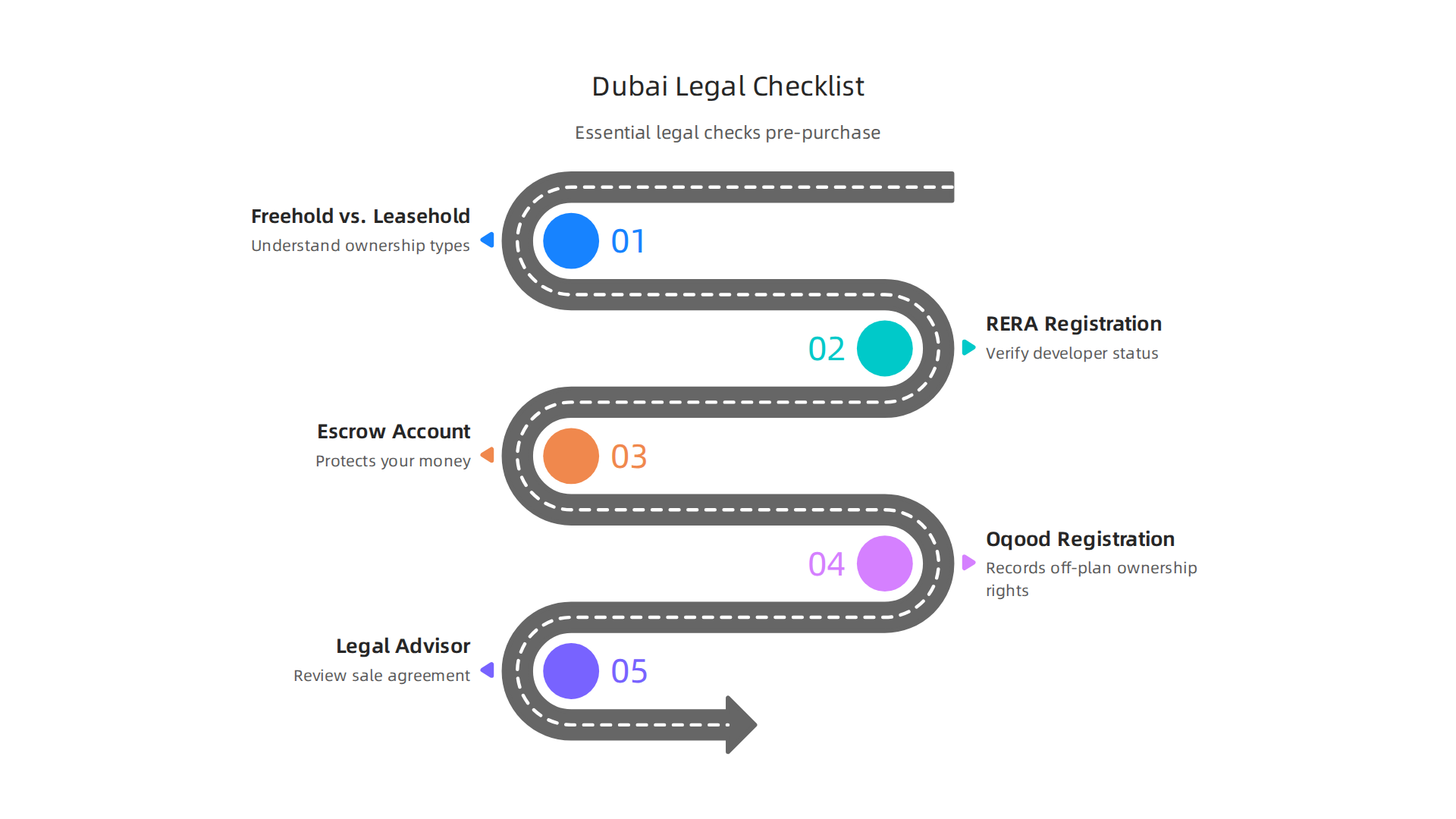
Missing this step can cost you.
First, understand the difference between freehold and leasehold. In Dubai, foreign investors can own freehold property in designated zones. That gives you full ownership of the land and the villa. Leasehold means you own the building but not the land for a set number of years. Most luxury villas like those in Palm Jebel Ali are freehold. The government updates these zones regularly. The latest Dubai real estate laws and regulations for 2026 list newly opened freehold areas such as Al Wasl and Dubai South.
Next, make sure the developer is registered with the Real Estate Regulatory Agency (RERA). Every developer must have a valid RERA number. You can check this on the Dubai Land Department (DLD) portal. Also confirm that the project has an escrow account. This is a third party account that holds your money until the property is completed. It protects you from fraud and delays. For off-plan purchases, you also need an Oqood registration. That is a certificate from the DLD that records your ownership rights during construction.
Finally, hire a legal advisor to review the sale and purchase agreement. A good lawyer will check for hidden fees, cancellation clauses, and handover timelines. This is especially important if you are not based in Dubai. For more on how the system protects your interests, read about Dubai real estate governance for investors. Doing this homework upfront saves you stress and money down the line.
Accessing Exclusive Off-Plan Opportunities in Palm Jebel Ali
As the dubai real estate market heats up in 2026, Palm Jebel Ali villas are some of the hardest to get. Supply is scarce, so early registration is essential. Developers give priority access to high-net-worth and pre-qualified investors. A specialist advisor can unlock early bird pricing and flexible payment plans. The Palm Jebel Ali off-plan villas 2026 report shows prices starting at AED 21.5 million, with experts projecting the dubai real estate price to rise 8-12% annually. To secure your spot, you need a trusted partner. Read our guide on how to choose a real estate agent in Dubai for luxury investments. Ready to take the next step? Connect with Ayaz Salman for a FREE Dubai Real Estate Consultation.
Registration and Priority Access
Getting your name on the list for a Palm Jebel Ali villa takes more than just expressing interest. You have two main routes. You can register directly with the developer, Nakheel, by visiting their sales center or website. Or you can work with an accredited broker who receives early allocations for top clients. The official Nakheel page for Palm Jebel Ali shows the full master plan and available villa collections.
Whichever route you choose, be ready to prove you are a serious buyer. Developers and brokers typically ask for proof of funds or a refundable deposit before granting priority access. This step filters out casual lookers and ensures only qualified investors move forward. It is standard practice in the dubai real estate market for high-demand off-plan projects with limited inventory.
For ultra-high net worth individuals, VIP preview events take things one step further. These invitation-only gatherings let you view model units, meet the design team, and secure prime frond positions before public sales open. Access to these closed-door events usually requires a broker with direct developer relationships. That is why finding the right partner matters. Read our guide on how to find a trusted Dubai real estate broker for your luxury villa purchase to know exactly what to look for.
Financing Options for Ultra-HNWIs
Once you have secured your broker and registered your interest, the next step is understanding how to fund your purchase. Most ultra-high-net-worth buyers pay cash for Palm Jebel Ali villas. But that does not mean financing is off the table if you prefer to keep your capital deployed elsewhere.
Private banks offer mortgage solutions tied to your global portfolio. Instead of a traditional income-based loan, these lenders look at your total assets. They may let you pledge securities or other real estate as collateral. This approach gives you flexibility without liquidating investments.
Developer payment plans also reduce the need for external financing. For Palm Jebel Ali villas, Nakheel offers an 80/20 structure. You pay 20 percent at booking, 60 percent in installments during construction, and 20 percent at handover. For a AED 21.5 million villa, that initial commitment is just AED 4.3 million. The bulk of your cash stays in your control until completion. You can read more about the Palm Jebel Ali off-plan villa 2026 payment plan on Dubai Property Insight.
When considering the dubai real estate price trajectory, financing decisions play a key role. Understanding how to structure your purchase can maximize your returns. For a deeper look at strategies used by wealthy buyers, check out our guide on luxury real estate market strategies for high net worth investors.
If you are ready to discuss your financing options with an expert, connect with Ayaz Salman for a FREE Dubai Real Estate Consultation. He can explain how asset-based lending works for international buyers and help you structure a deal that suits your portfolio.
Summary
This guide explains Dubai’s 2026 real estate price landscape, showing which neighbourhoods are commanding the highest per‑square‑foot values and where buyers can still find relative value. It covers the main price drivers—economic diversification, visa reforms, tight supply in prime villa communities—and contrasts established ultra‑luxury markets like Palm Jumeirah and Emirates Hills with rising hotspots such as Palm Jebel Ali and Dubai Creek Harbour. You’ll find data on average prices and rental yields, practical steps to evaluate ROI, legal checks every international buyer must do, and how high‑net‑worth investors access exclusive off‑plan opportunities. The article also outlines common financing structures, developer payment plans, and where to get trusted broker support so you can make informed buying or investing decisions in Dubai.